Terry Richardson: The Snapshot That Shook Fashion
Terry Richardson.
The Snapshot That Shook Fashion.
Born Into the Frame
Terry Richardson was born in New York in 1965 — the son of Bob Richardson, one of the most acclaimed and troubled fashion photographers of the 1960s, whose innovative work for Harper's Bazaar and Vogue helped define an era even as schizophrenia and drug abuse derailed his life. His mother, Norma Kessler, was an actress. Terry grew up inside fashion photography's gravitational pull, with all of its glamour and all of its damage in plain view.
He Wanted to Be a Punk
Photography wasn't the first plan. After his parents divorced, Richardson moved to Woodstock with his mother and his stepfather, the English guitarist Jackie Lomax. He wanted to be a punk musician, and played bass in the band The Invisible Government for four years. It was only later — camera in hand — that he found the medium that would make and unmake his name.
Against the Gloss
Richardson built a look out of the opposite of everything fashion photography had become. Where the industry was glossy, retouched and theatrical, his images were flat-lit, snapshot-raw and shot against plain white. The thumbs-up, the oversized glasses handed to his subjects so they could "pretend to be him" — it became a visual signature copied a thousand times over.
"He took the studio gloss away and left something that looked uncomfortably real."
The Most Imitated Eye in Fashion
At his peak, Richardson shot advertising for Marc Jacobs, Supreme, Tom Ford, Yves Saint Laurent, Sisley and Aldo, with editorial across Rolling Stone, GQ, Vogue, Vanity Fair, Harper's Bazaar, i-D and Vice. He shot the 2010 Pirelli Calendar and a roll-call of the era's biggest names — Barack Obama, Lady Gaga, Rihanna, Miley Cyrus and Cameron Diaz among them.
His books turned the aesthetic into artefacts: Hysteric Glamour (1998), the notorious Terryworld (Taschen, 2004), and Lady Gaga x Terry Richardson (2011), shot over 46 days at the height of her fame. For a decade, that white-background snapshot was the most imitated image in the business.
A Legacy That Can't Be Separated
Since 2001, Richardson has been accused by multiple models of sexual misconduct — of pressuring or coercing them into sexualised scenarios on set, sometimes without clear consent.
The criticism became impossible to ignore around 2010, when model Rie Rasmussen confronted him publicly in Paris and called his work degrading, and former model Jamie Peck wrote about a disturbing experience she had had with him at nineteen. In 2014, as more accounts surfaced, Richardson published a letter defending himself.
In 2017, brands and publishers including Valentino, Bulgari and the Condé Nast titles Vogue, GQ, Glamour, Vanity Fair and Wired stopped commissioning his work. He has not actively worked as a photographer since 2018. His influence on the look of fashion is real — but it cannot be discussed honestly without this.
The Aesthetic Outlived the Man
The irony is that the style outlasted the photographer. The raw, direct, unretouched look he made famous became the default language of social media and modern campaigns — proof that an aesthetic can long outrun the person who popularised it. The pictures are everywhere; the man behind them is not.
Premium, Unretouched.
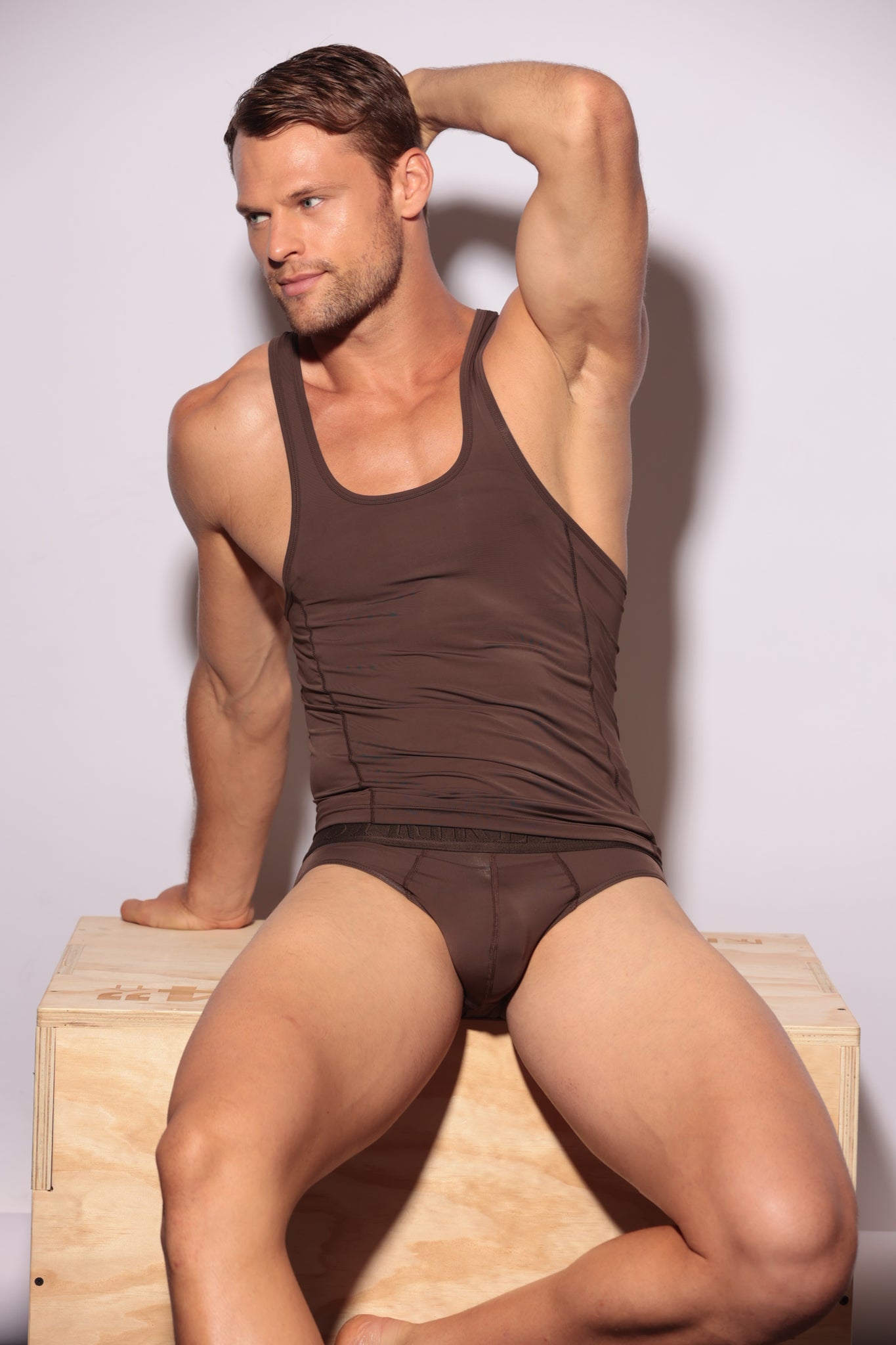
Strike Pro — our own-label range. Clean, confident and built to look good with or without the studio lighting.


Get 10% off your first order
Join over 20,000 subscribers. Be first to know about new drops, exclusive edits and insider offers.